The Death and Rebirth of the Forest Service
Top Line: Trump has overtly broken a Forest Service that has long been covertly broken.
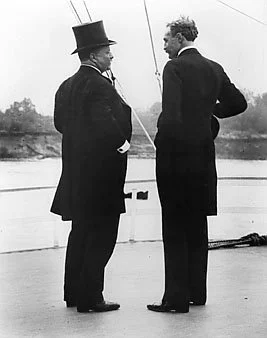
Figure 1. President Theodore Roosevelt (left) and the first chief of the Forest Service, Gifford Pinchot (right). The act of Congress establishing the Forest Service was signed into law by President Roosevelt in 1905. These 121 years later, it’s time for Congress to enact a new law pertaining to Forest Service functions.
The Forest Service we have known and loathed is dead.
It is being replaced in a devious restructuring that allegedly is a reorganization for efficiency but is in fact part of a scheme to end the National Forest System as we have known and loved it.
Even if the Trump administration is stopped on this, it’s not likely the agency will return to behaving in the public interest for the benefit of this and future generations, as that has not been the case since World War II. The public lands community should not seek a return to the status quo ante bellum (“the state existing before the war”) but rather set out for a status quo post bellum (“the state existing after the war”).
After Trump, a better and stronger network of institutions and bureaucracies can actually serve the forests—but only if Congress improves. Congress will not improve until citizens elect better elected officials. Citizens will only do that if the public lands conservation community fundamentally reinvents itself to primarily engage the legislative branch, secondarily engage the judicial branch, and tertiarily engage the executive branch—the very opposite of what the public lands conservation community has always done.
The Outline of Another Trumpian Tragedy
The depth and breadth of the institutional and bureaucratic destruction in this case is unprecedented. I will very broadly outline the carnage below. If you want to know the details, the best reporting on the evisceration of the Forest Service is from More Than Just Parks (a Substack-based conservation organization), which has extensively detailed the massacre (see “For More Information” below). If you are not a subscriber, you should be.
Decapitation
The national office of the Forest Service will be moved from the seat of the national government in Washington, DC, to Salt Lake City, the capital of the state that is suing to take over 18.5 million acres of federal public land in Utah (but not the national parks, as they are cash cows for the state).
Dismemberment
There are currently nine regional Forest Service offices:
• Region 1, Northern Region (MT, ND, northern ID), Missoula, MT
• Region 2, Rocky Mountain Region (CO, KS, NE, SD, WY), Lakewood, CO
• Region 3, Southwestern Region (AZ, NM), Albuquerque, NM
• Region 4, Intermountain Region (southern ID, NV, UT, western WY), Ogden, UT
• Region 5, Pacific Southwest Region (CA, HI), Vallejo, CA
• Region 6, Pacific Northwest Region (OR, WA), Portland, OR
• Region 8, Southern Region (AL, AR, FL, GA, KY, LA, MS, NC, OK, SC, TN, TX, VA, PR), Atlanta, GA
• Region 9, Eastern Region (CT, DE, IL, IN, IA, ME, MD, MA, MI, MN, MO, NH, NJ, NY, OH, PA, RI, VT, WI, WV), Milwaukee, WI
• Region 10, Alaska Region (AK), Juneau, AK
(Region 7, based in Philadelphia, PA, was eliminated in 1965.)
Replacing them will be fifteen “state” offices, shown in Figure 2.
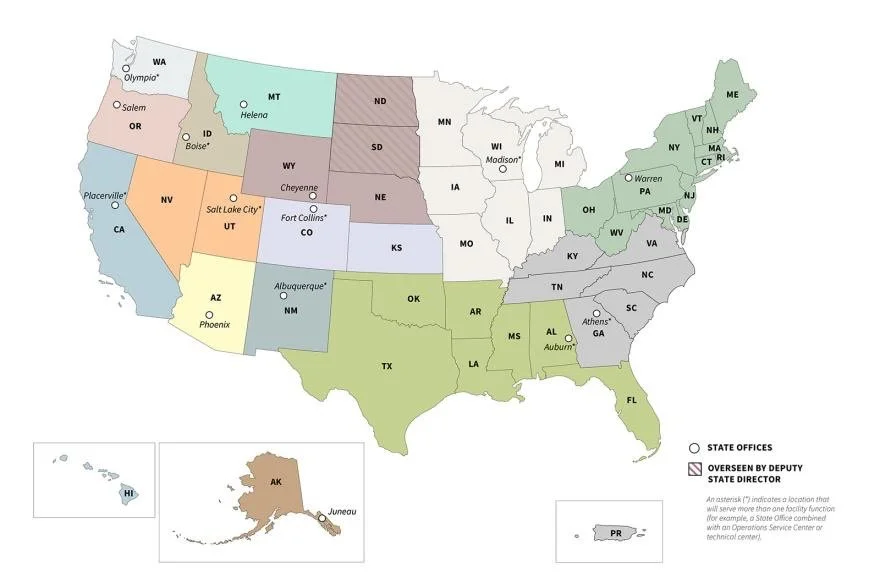
Figure 2. New Forest Service “state” offices. Source: USDA Forest Service.
The locations for these new offices seem to be chosen to (1) discourage Forest Service employees from relocating there and (2) reward Trump strongholds. As examples:
• Auburn, AL. 108 miles SW of Atlanta, GA. 40 to 50 miles away from two small regional airports (MGM and CSG); 108 miles away from Atlanta (ATL).
• Placerville, CA. 44 miles east of Sacramento. Perhaps the office space is cheaper. Trump carried El Dorado County with 55 percent, while Harris carried the far more populous Sacramento County with 58 percent.
• Fort Collins, CO. 65 miles north of Denver (DIA).
• Warren, PA. Population 9,404 in 2020. There are four very regional airports 30 to 60 miles away. In 2024, Kamala Harris received 30 percent of the presidential vote in Warren County, PA, while Donald Trump received 69 percent.
Self-aggrandizing fun fact: I called for the elimination of Forest Service regional offices in 2007 (see “For More Information”). My paper was cited in a White House whitepaper justifying the reorganization. Yes, I was cited out of context.
Blindfolding and Gagging
Fifty-seven Forest Service research facilities will be closed:
• California (Anderson, Fresno, Chico, Fort Bragg, Mt. Shasta, Hat Creek)
• Connecticut (Ansonia, Hamden)
• Florida (Tallahassee)
• Hawaii (Hilo, Volcano)
• Illinois (Evanston)
• Kentucky (Lexington)
• Louisiana (Pineville)
• Maryland (Baltimore)
• Massachusetts (Westfield)
• Michigan (East Lansing, Houghton, L’Anse, Wellston)
• Minnesota (Grand Rapids, Ely)
• Mississippi (Leland, Oxford, Saucier, Starkville, Stoneville)
• Montana (Bozeman, Hungry Horse)
• Nevada (Reno)
• New Hampshire (Bartlett)
• New York (Cortland, Lakeville, New York City)
• Ohio (McArthur)
• Oregon (Portland)
• Pennsylvania (Irvine, Long Pond, Williamsport, York)
• South Carolina (Clemson, Huger)
• South Dakota (Rapid City)
• Texas (Nacogdoches)
• Utah (Cedar City, Logan, Ogden)
• Vermont (Burlington)
• Virginia (Blacksburg)
• Washington (Seattle, Wenatchee)
• West Virginia (Princeton)
• Wisconsin (Prairie du Chien, Wisconsin Rapids)
The surviving research facilities are shown in Figure 3.
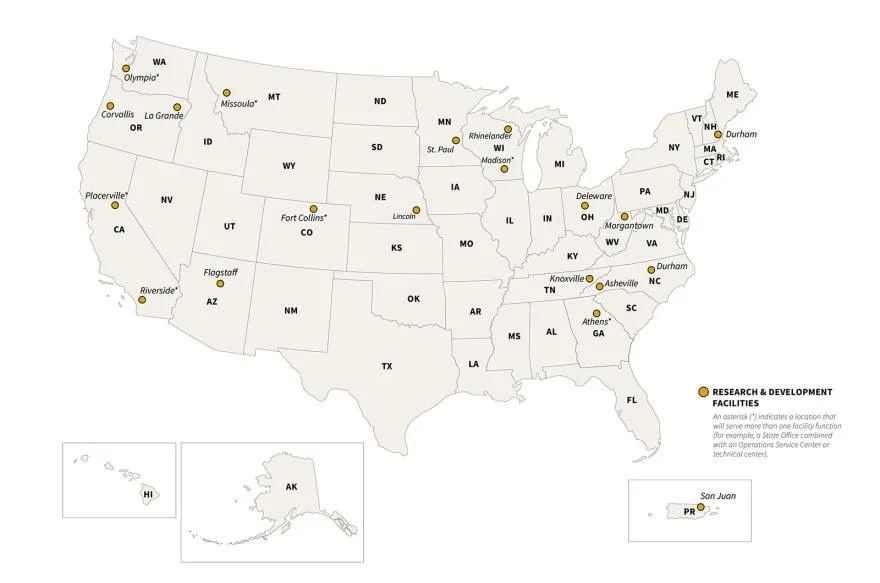
Figure 3. The surviving research unit locations of the Trumpized research arm of the Forest Service. Source: USDA Forest Service.
Thinning
Fewer employees, less attention (not that all of the attention was good).
According to More Than Just Parks, when the Bureau of Land Management moved its headquarters from our nation’s capital to Durango, CO, during Trump 1.0, only three employees decamped the District of Columbia for Grand Junction, while 87 percent of affected staff walked out the door. Today, both members of many couples have careers, and one moving to East Podunk to continue their career may not work for their significant other’s career and/or the family unit. The nefarious bastards reorganizing the Forest Service are counting on it.
Imagining the Phoenix That Could Rise Out of the Ashes
While resisting, let’s not defend the indefensible. Yes, conservationists must resist the Trumpian assault on the Forest Service, but let’s not do so blindly. I have recently called for the death of the Forest Service and won’t repeat my detailed reasoning here. Suffice it to say that the Forest Service has not been in service of forests for decades and needs radical reform.
See Public Lands Blog post “The Death of the Forest Service Is Overdue” (2025)
I will repeat my recommendations on how to reorganize the functions of the Forest Service to better achieve its purposes for the benefit of this and future generations.
The Forest Service currently has three official branches: the National Forest System, state and private forestry, and research.
The National Forest System branch of the Forest Service should be transferred from the US Department of Agriculture to the US Department of the Interior and placed under the administration of a new National Lands Conservation Service, which would also absorb the Bureau of Land Management and its landholdings. I recommend that the National Forest System be complemented with a National Desert and Grassland System.
See Public Lands Blog post “A National Desert and Grassland System” (2016)
The state and private forestry branch of the Forest Service should be transferred to the USDA Natural Resources Conservation Service, as NRCS already interacts with state and private entities.
The research branch of the Forest Service should be transferred to the USDI Geological Survey, which describes itself as “the science arm of the Department of the Interior.” The resulting agency could be renamed the National Natural Sciences Service. An exception is the Forest Products Laboratory in Madison, WI, which should be transferred to the USDA Agricultural Research Service and renamed the Fiber Products Laboratory so as to increase its attention to farm-based fiber for construction and paper products.
The de facto fourth branch of the Forest Service is its fire-industrial complex, which dwarfs the official three. These functions should be transferred to a new National Fire Service, housed in the Department of Homeland Security. Ideally, it would spend most of its resources making existing human infrastructure resistant to the inevitable fires and not waste resources ineffectively trying to extinguish wildfires. The functions should not be transferred to the Federal Emergency Management Agency, as FEMA deals with acute emergency, while fire is a chronic emergency that requires a different kind of thinking.
It’s All About Congress and Elections
No entity is more important to the conservation of public lands than Congress.
Congress confirms judges and high administration officials. Congress makes the laws. Congress determines if courts can enforce laws. Congress funds the government. Congress ratifies treaties, and much more.
In terms of public lands, the property clause of the US Constitution vests all power over public lands in Congress. Any power the president, secretary of the interior, or secretary of agriculture has over public lands is due to Congress expressly delegating that power by statute. When it comes to the public lands, neither the executive branch nor the judicial branch has any inherent or implied power.
As with many matters in addition to public lands, the legislative branch has delegated too much power to the executive branch.
The only way to regain a public lands conservation majority in Congress is to elect a better Congress. That’s not going to happen until the public lands conservation community engages in the politics of elections. There is nothing more important.
See Public Lands Blog post “While It Has Never Been Worse . . .” (2025)
For More Information
Kerr, Andy. July 16, 2007. “Eliminating Forest Service Regional Offices: Replacing Middle Management with More On-the-Ground Restoration.” Larch Company Occasional Paper #5 (pdf).
———. October 21, 2016. “A National Desert and Grassland System.” Public Lands Blog.
———. June 16, 2025. “While It Has Never Been Worse . . . .” Public Lands Blog.
———. December 15, 2025. “The Death of the Forest Service Is Overdue.” Public Lands Blog.
More Than Just Parks. 2026. “The U.S. Forest Service, Dismantled.” A More Than Just Parks Investigation.
Pattiz, Jim. March 25, 2026. “BREAKING: Trump Administration Orders Dismantling of the U.S. Forest Service.” More Than Just Parks, Substack.
———. April 9, 2026. “White House Confirms Forest Service Dismantling in Rebuttal.” More Than Just Parks, Substack.
USDA Forest Service. 2026. Forest Service Reorganization (web page).
———. 2026. Organizational Realignment (fact sheet, pdf).
Bottom Line: Congress needs to replace the Forest Service with bureaucratic structures that serve forests. Congress will only do that when Americans have elected a better Congress.