A Congressional Public Lands Scorecard
Top Line: Finally, a quantitative measure allows the public to see how our federal elected officials rate on federal public lands conservation.
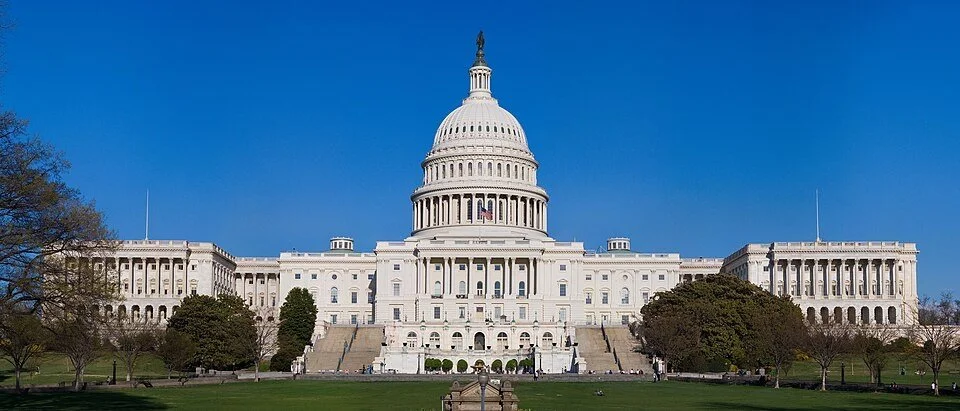
Figure 1. The US Congress, source of all evil—and all good—regarding public lands. Anything bad or good that happens to the nation’s public lands can be traced back to Congress. Source: Wikipedia.
The US Constitution’s property clause (Article IV, Section 3, Clause 2) vests in Congress all power and authority over the nation’s public lands. In the end, anything bad or good that happens to the public lands is thanks to Congress, which allows it—expressly or implicitly. Thus, the greatest threat to the nation’s public lands is not the Trump administration but Congress.
While Congress has essentially no appetite to sell off federal public lands, the appetite does exist to sell out public lands. Yes, our sacred public lands remain in federal ownership, but operational control is increasingly being turned over to the states or industrial interests. Yes, the color remains unchanged on the map, but the lands and waters those colors depict bear increasing scars.
How do citizens exert pressure on our federal elected officials to stop this slide toward compromising the public lands? The first step is to become aware of the votes being taken in Congress regarding the public lands and of where our members of Congress are coming down on those votes. This is easier than it’s ever been, thanks to a new online resource that every conservationist should know about.
Introducing the Congressional Public Lands Score
Since 1970, the national League of Conservation Voters (LCV) has ranked members of Congress on their conservation voting record. While scored votes usually include some public lands issues, such are in the minority and bundled with votes on climate, clean air, clean water, toxic chemicals, and a variety of other environmental issues. The LCV cannot score every public lands conservation vote, and the members of Congress know that.
Comes now the first-ever scorecard to grade US senators and representatives on how they vote on public lands issues. This fine and needed effort comes not from the LCV or any other traditional national conservation organization but from a couple of guys with a Substack newsletter and website called More Than Just Parks. (“Substack is an online platform that enables writers, podcasters, and creators to publish content directly to subscribers via email and a website, bypassing traditional media gatekeepers.”)
More Than Just Parks (MTJP) has created and is maintaining a Congressional Public Lands Score online accountability tool. MTJP explains its methodology:
This scorecard includes three categories of recorded floor votes:
(1) Final passage and motion-to-proceed votes on legislation and Congressional Review Act resolutions that directly govern federal public lands, including management plans, leasing, land disposal, monument designations, Endangered Species Act implementation affecting federal land, and Forest Service and BLM timber policy.
(2) Senate confirmation votes, including en bloc packages, for senior officials at the Departments of the Interior and Agriculture whose positions oversee federal public-lands agencies.
(3) Amendment votes during budget resolution and reconciliation vote-a-ramas where the amendment directly addressed public-lands management, the federal land-management workforce, or the sale or disposal of federal land.
Amendment votes where the public-lands connection is incidental to a broader topic, including general energy tax credit amendments, broader environmental regulatory amendments, and workforce or funding amendments that cover federal employees generally, are excluded. Voice votes, amendments ruled out of order without a motion to waive, withdrawn amendments, and procedural motions that do not produce a record of individual members’ positions are also excluded. The scorecard is updated as additional qualifying votes occur during the 119th Congress. [emphasis added]
Votes Scored to Date
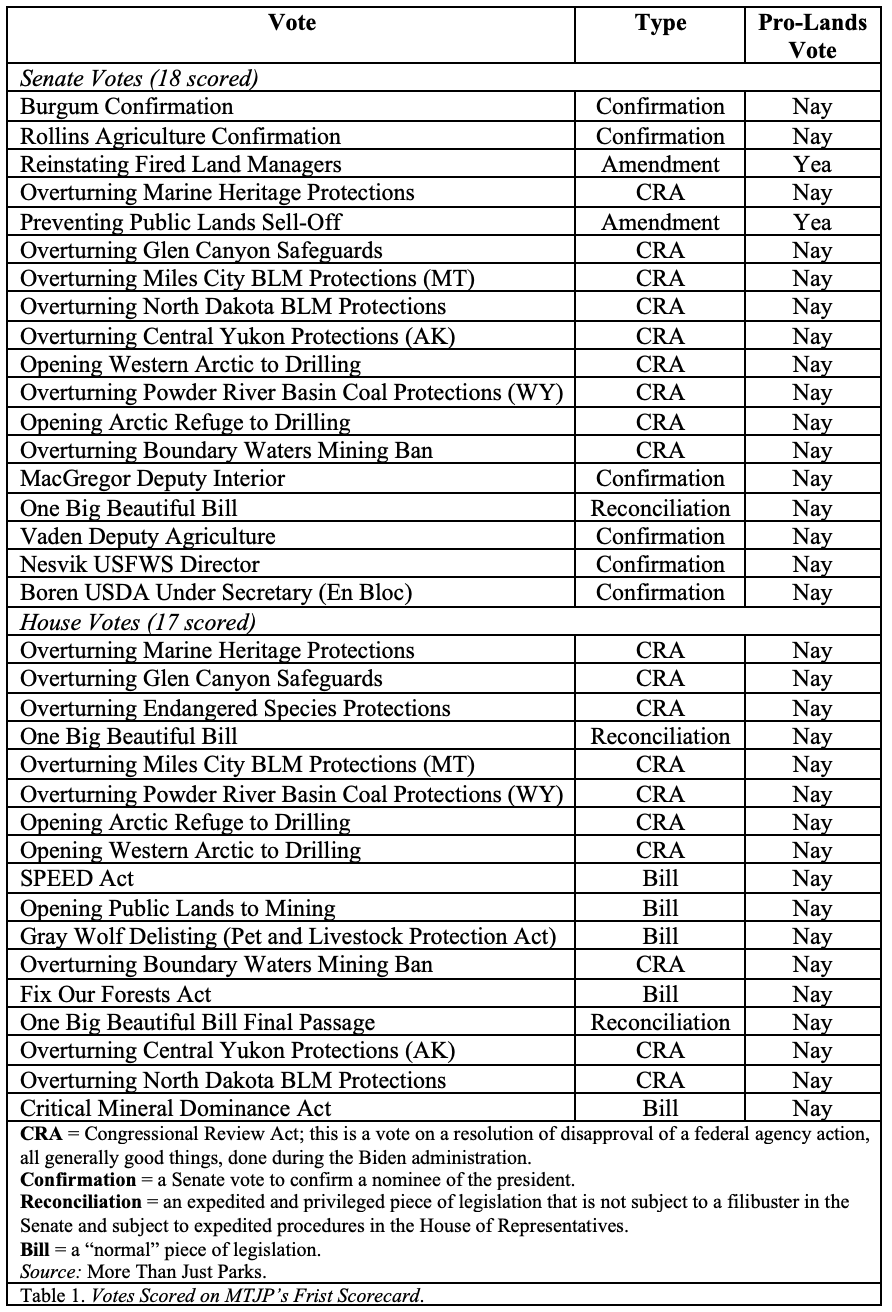
To date, for this current 119th Congress (2025–26), MTJP has scored eighteen Senate votes and seventeen House votes (Table 1). Notice that every pro–public lands vote was a no vote, save for one, meaning the vast majority of bills, amendments, and nominations coming out of the Trump administration are anti–public lands. Even the one correct “Yea” vote in the Senate was saying no to selling off public lands.
Some Observations on the Scores So Far
Rooting around the public lands scorecard reveals some interesting voting patterns and puts the spotlight on what various members of Congress are thinking and doing about public lands. Note that grading is not on a curve. A member of Congress has to vote correctly (pro–public lands) three-fifths of the time (60 percent) to get a D.
In the Senate:
• Only nine senators are graded A+, and only one state has two A+ senators: Oregon. (More on those two later.)
• Fifty-two senators, all Republican, receive unperfect grades of F. There are fifty-three Republican senators at the moment, and the new Republican from Oklahoma just got there so is not graded. That means all the As, Bs, Cs, and Ds go to Democrats in the Senate.
• Only one grade of D was earned in the Senate, by Senator Ruben Gallego (D-AZ). Thinking about running for president, Ruben? No, thank you. Your fellow Arizonian, Mark Kelly (D-AZ), representing precisely the same constituency, was able to pull out a B.
• Three senators garner Cs: Fetterman (D-PA), Heinrich (D-NM), and Rosen (D-NV).
• Fifteen Senate Democrats receive Bs, and nineteen receive As.
• Nine Democrats achieve A+ ratings: Coons (NV), Duckworth (IL), Hirono (HI), Kim (NJ), Markey (MA), Merkley (OR), Schumer (NY), Van Hollen (MD), and Wyden (OR).
• New Mexico’s senators receive a collective grade of B, but, disappointingly, senior senator Martin Heinrich, the ranking (most senior in the minority) member of the Senate Energy and Natural Resources Committee, receives a grade of C. In contrast, two of the three members of the House of Representatives from the Land of Enchantment are graded A+ (Stansbury and Leger Fernández). The third House member (Vaquez) still exceeds Heinrich with a B.
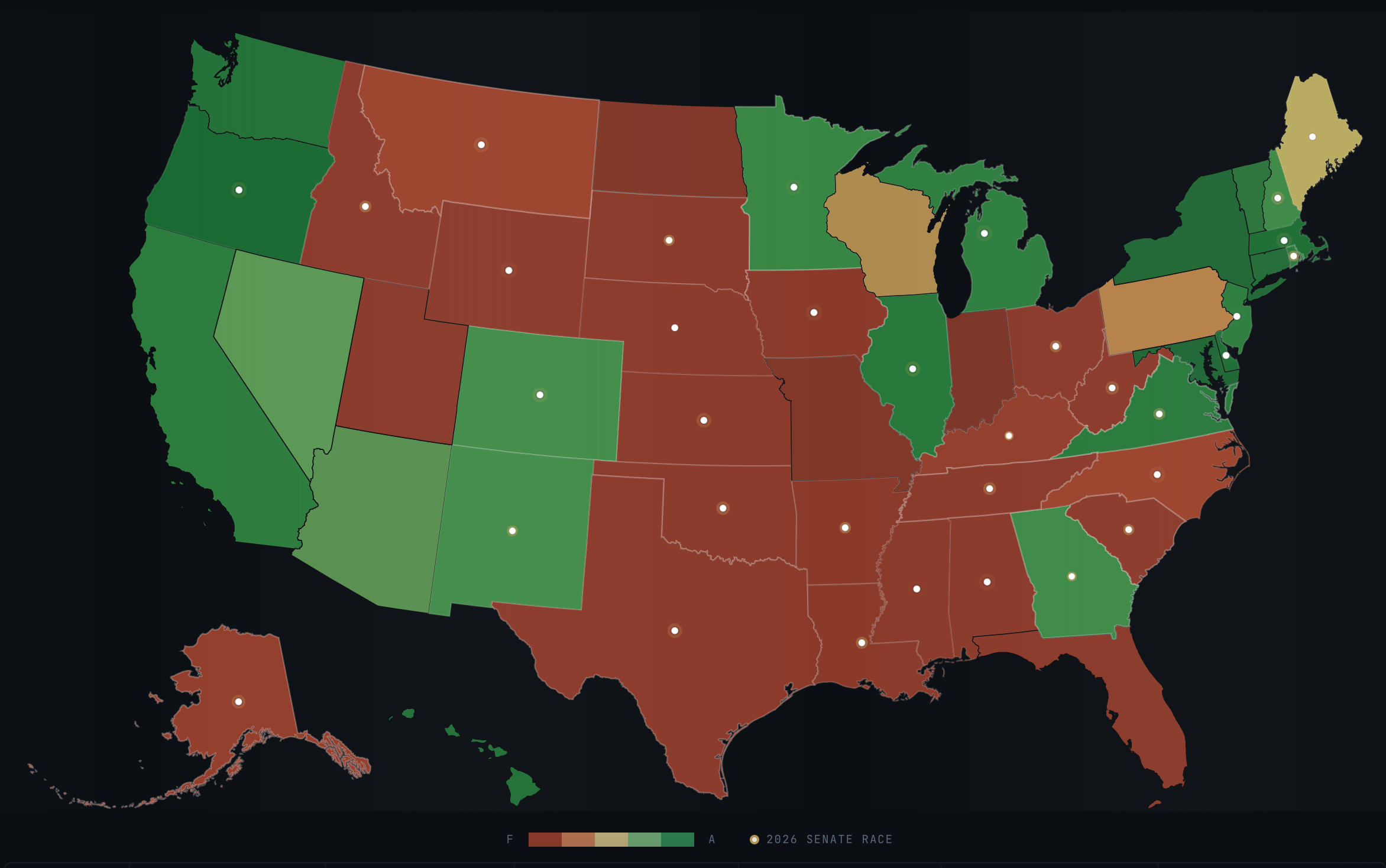
Figure 2. More Than Just Parks public lands scorecard for the US Senate. The greener the better; the browner the worser (I know, but it rhymes). White dot indicates an election for US senator in 2026. Source: More Than Just Parks.
In the House of Representatives:
• My home state of Oregon earns a collective A, even though the one Republican (Cliff Bentz) scores a solid F. Bringing up the collective average are three Democrats with A+s (Salinas, Bonamici, and Dexter) and two Democrats with As (Hoyle and Bynum).
• The two House members from Maine score a collective B. Despite Jared Golden’s F, Chellie Pingree pulls it up with her A+. Both are nominally Democrats.
• 231 House members receive Fs. 223 of those are Republicans, and eight are Democrats: Jim Costa (CA), Eric Swalwell (CA), Henry Cuellar (TX), Mikie Sherrill (NJ), Adelita Grijalva (AZ), Jared Golden (ME), Adam Gray (CA), and Marie Gluesenkamp Perez (WA). But note: (1) Grijalva replaced her late father, Raúl Grijalva (a great guy), in a special election, which means she wasn’t yet in office for several early recorded votes. When she did vote, she voted correctly. She has also missed recent votes. (2) Mikie Sherrill missed a lot of early votes while running for governor of New Jersey. When she did vote, she voted correctly seven of eight times. She is now governor. (3) Eric Swalwell missed a lot of votes while running for governor of California and into sexual misconduct (which he denies). He is no longer in the House of Representatives and has “suspended” his gubernatorial campaign.
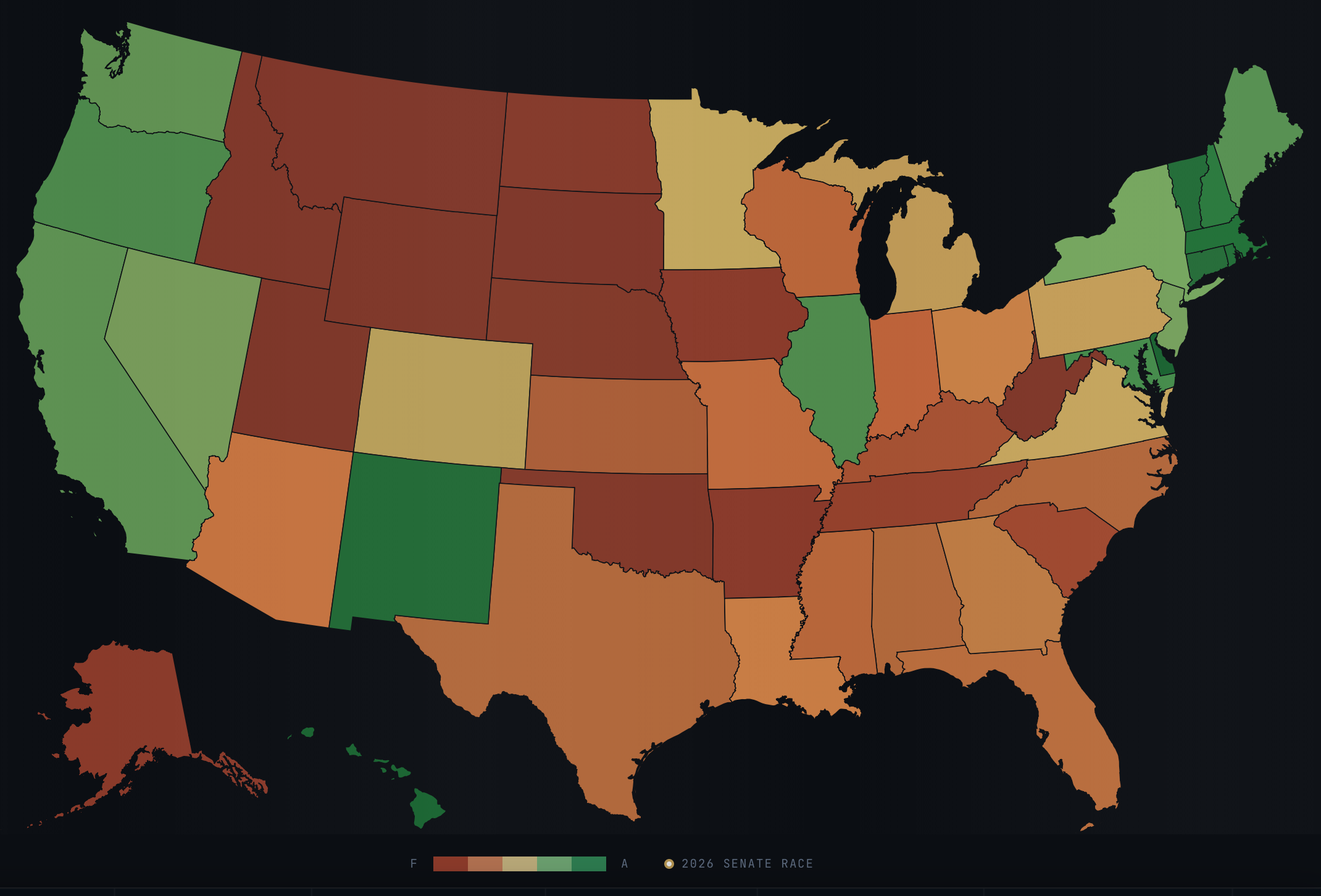
Figure 3. More Than Just Parks public lands scorecard for the US House of Representatives. The greener the better; the browner the worser (I know, but it rhymes). Source: More Than Just Parks.
Some Observations on the Political Process at This Moment
The public lands scorecard also prompts some thoughts about the configuration of Congress at this moment and what that means for public lands.
• As a class, Democrats are not as green as they appear in re public lands. It’s easy for most Democrats (with notable exceptions) to be anti-Trump.
• As a class, Republicans are as brown as they appear in re public lands. The lockstep voting by all Republican members of the House and almost all Republican US senators means unquestioning support for the president’s anti–public lands agenda.
• In this hyper-partisan political atmosphere, it’s extremely easy for a Democrat from a state or district with little federal public land to be green. It’s even easy for Democrats from states with a lot of federal public land.
• The rules are stacked in favor of doing bad and against doing good. To pass a new law doing something good through the Senate takes sixty votes to overcome the filibuster. However, it only takes fifty-one votes to do something bad, such as (1) confirm unqualified, unprincipled, and/or unspeakable people to high government offices or judgeships; (2) overturn regulation or policy done by a previous administration; or (3) package a parade of horribles into a budget reconciliation bill.
• Almost no good pieces of legislation get a floor vote. Because a political party that is hostile to public lands conservation is in the majority, no good legislation can pass out of committee and get a vote on the floor.
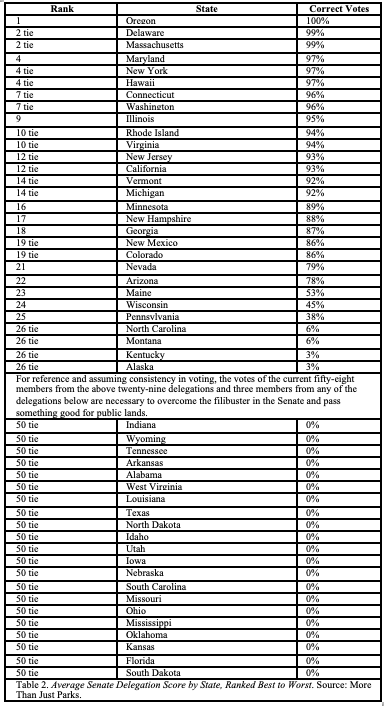
• Presently, the US Senate does not have a conservation majority, especially when sixty votes are needed to do good (see Table 2; alas, it appears MTJP did not do a similar tally for the House of Representatives).
What the Scorecard Reveals About Would-Be Presidents
Ballotopedia lists thirty-five politicians who have been discussed in the media as potential candidates for the 2028 Democratic presidential nomination. Let us consult the public lands scorecard for what it reveals about the sixteen current members of Congress who appear on this list.
Twelve are sitting US senators: Cory Booker (NJ, grade B), John Fetterman (PA, grade C), Ruben Gallego (AZ, grade D), Kirsten Gillibrand (NY, grade A), Mark Kelley (AZ, grade B), Amy Klobuchar (MN, grade B), Chris Murphy (CT, grade A), Jon Ossoff (GA, grade B), Bernie Sanders (VT, grade A), Elissa Slotkin (MI, grade B), Chris Van Hollen (MD, grade A+), and Raphael Warnock (GA, grade B).
Four are sitting members of the House of Representatives: Jason Crow (CO, grade A+), Ro Khanna (CA, grade A+), Alexandria Ocasio-Cortez (NY, grade A+), and Richie Torres (NY, grade A).
The “Park Brothers”: A New Take on Public Lands Conservation
In my recent conservation chatters, I began noting references to the “Park Brothers.” I was confused until I deduced/induced that the references were to Jim and Will Pattiz, who operate the More Than Just Parks Substack newsletter and website.
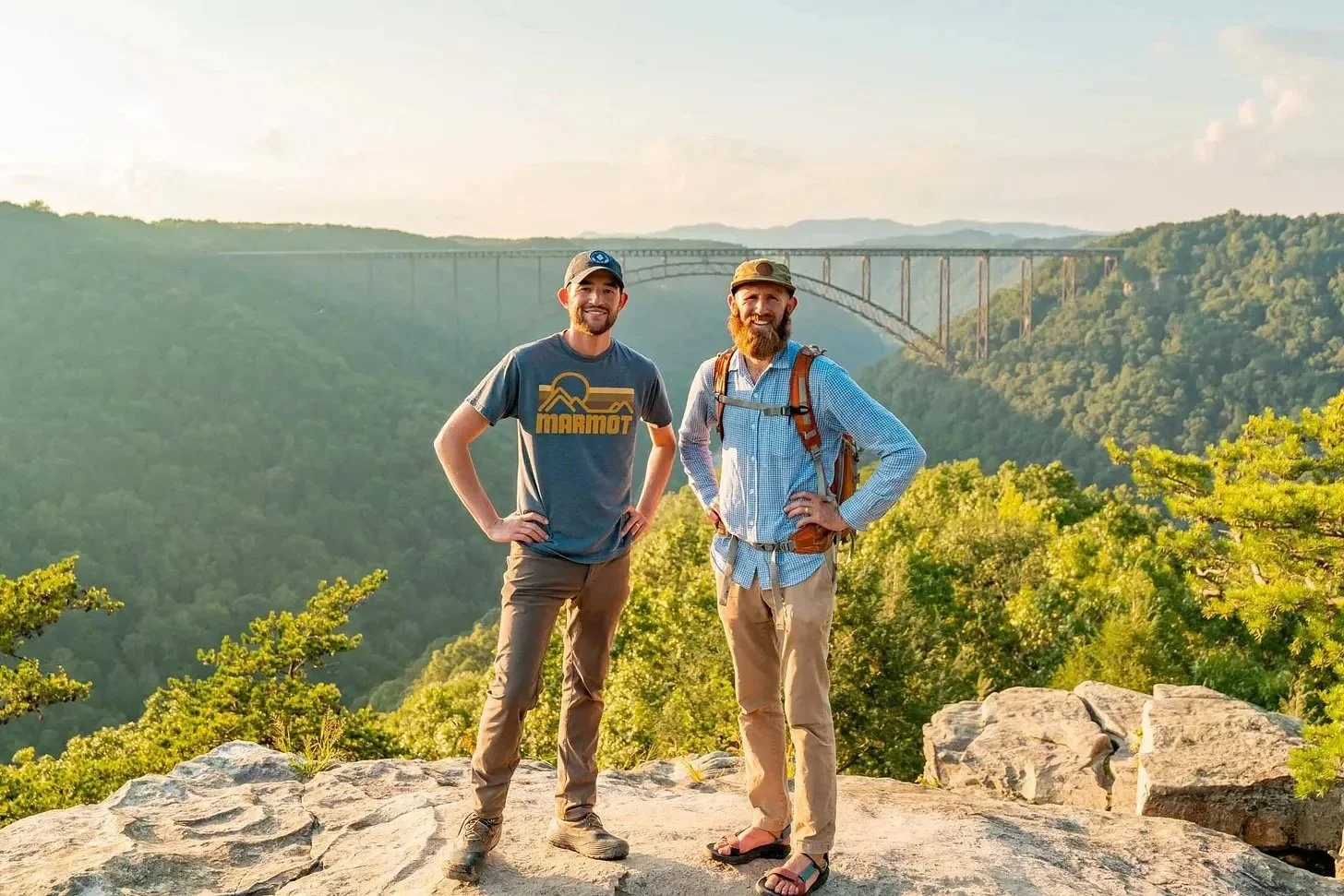
Figure 4. Jim (left) and Will Pattiz, the brothers who founded More Than Just Parks. Source: More Than Just Parks.
Both Will and Jim each describe themselves as “an award-winning filmmaker and conservationist who serves as the co-founder of More Than Just Parks.” Will goes on to note that he “has spent his entire adult life capturing the beauty of our public lands in an effort to protect them for future generations.” In stark contrast, Jim says he “has spent his career traveling to America’s most wild and precious spaces telling the stories of public lands.”
I’m sure their mother and father and everyone else who knows them knows them to be unique. In any case, to public lands conservationists, this dynamic duo is a breath of fresh air. And “Park Brothers” is easier to remember than MTJP.
Methinks something else might be going on. With 25,000 claimed subscribers, almost all of whom are surely highly motivated public lands conservationists, More Than Just Parks is emerging as a new kind of national conservation organization. The Park Brothers seek not only your attention (and perhaps some of your money) but also your action. Just like a traditional conservation organization, they seek to influence congressional outcomes.
The first mission of the Sierra Club is “To explore, enjoy, and protect the wild places of the earth.” That motto also fits More Than Just Parks. MJTP’s website is full of information about how to enjoy the nation’s public lands. To know the public lands leads to love of the public lands. Love of the public lands leads to wanting to protect the public lands.
What You Can Do to Help
1. Go to the More Than Just Parks Congressional Public Lands Score page to first learn and then act.
2. Subscribe to the More Than Just Parks Substack newsletter. You can choose a free subscription, become a paid subscriber for $7/month or $80/year (it’s worth it), or become a founding member for $250/year (I just upgraded from paid).
3. Ask your favorite national conservation/environmental organization that works on public lands: “Why the hell didn’t you think of this?”
Bottom Line: Grading elected officials on public lands conservation is necessary but not sufficient. Conservationists must hold them to account.