Public Lands Project 2029, Part 1: Reforming Existing Conservation Systems and Agencies
This is the first in a series of two Public Lands Blog posts that propose a Public Lands Project 2029. Part 1 recommends reforms of existing federal land conservation systems and the agencies that administer them. Part 2 will recommend new federal land conservation systems and additional reforms.
Top Line: The conservation community needs to be prepared to exploit the next big opportunity to greatly advance the conservation of public lands and waters in the United States.
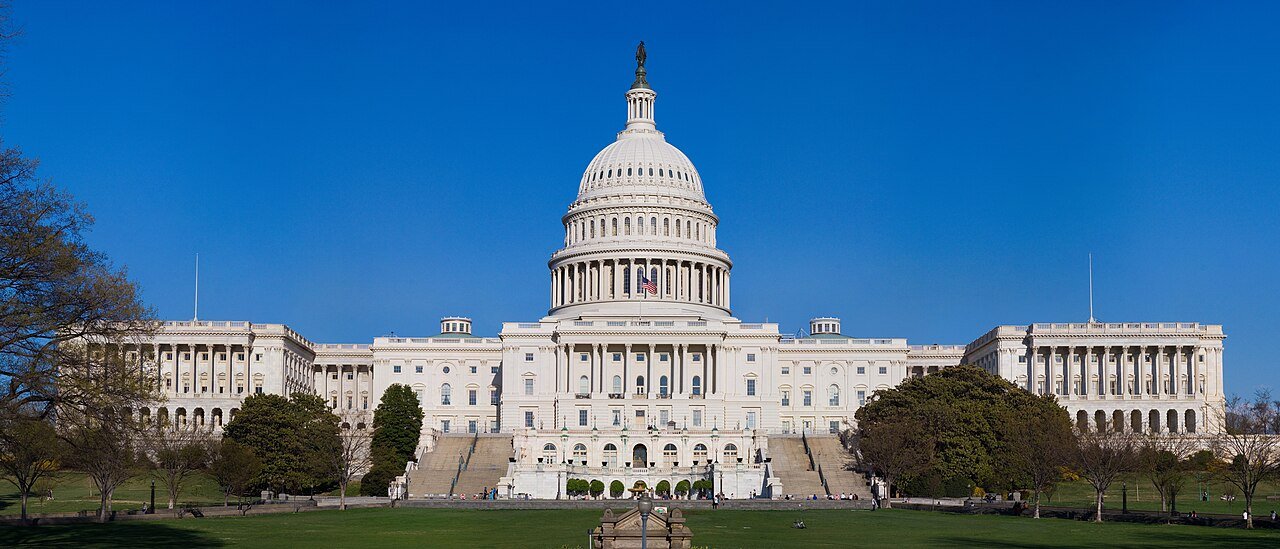
Figure 1. The US Congress: both the greatest threat to the nation’s public lands and the only and greatest opportunity to preserve them for the benefit of this and future generations of Americans. It’s up to voters to make Congress do good things. Source: Wikipedia.
It is important at this moment to not prepare to fight the last war again. It is equally necessary and desirable to learn from one’s enemies.
The Trump 2.0 multifront assault on the nation’s public lands is extremely well organized. This administration is not winging it but rather is carrying out Project 2025, a blueprint by the forces of darkness to undo all that probably you and I hold dear in terms of what the nation should do and be, how the government should be run, why we have a society, and why we pay taxes. This blueprint for evil addresses government writ large and also targets the nation’s public lands and waters.
Even though another Trump administration and Republican-controlled Congress were not assured before the 2024 general election, the forces of darkness had published their plan in 2023 and were thus well prepared to make their political wet dream come true. Most of us are suffering from the implementation of Project 2025 in several aspects of our lives, including as it relates to the nation’s public lands.
After the 2028 general election, there will be a new president and a new Congress. Though it is far too soon to lay odds on the matter, it could be the case that this election is one of our most consequential, like the elections of 1788, 1800, 1828, 1860, 1864, 1904, 1912, 1932, 1964, 1980, and 2024. All resulted in sweeping changes to the federal government, most but not all for the better.
The public lands conservation community—not to mention the environmental movement, let alone the forces of light—needs to be ready in 2029 to exploit a transformational election in 2028 if such were to occur. Readiness means not only being prepared with proposed policies to elevate the conservation of the nation’s lands and waters but also having done the political work necessary to be able to actually advance such policies.
This Public Lands Blog post and the next one is a wish list of necessary and desirable policies that should be included in Public Lands Project 2029. To elevate the conservation status of public lands, Public Lands Project 2029 must articulate reforms to both the various existing (and proposed) conservation systems, and the various existing (and proposed) agencies that administer conservation systems. In addition, new land and water conservation systems are needed.
See Public Lands Blog post “Federal Systems for the Conservation and Enjoyment of Lands and Waters” (2017)
HOWEVER, ANY WISH LIST WILL BE FOR NAUGHT UNLESS THE FORCES OF LIGHT PREVAIL POLITICALLY. SUCH MUST NOT BE MERELY WISHED FOR BUT ALSO AGGRESSIVELY FOUGHT FOR BETWEEN NOW AND 2029. THE LATTER MUST PRECEDE THE FORMER. (Yes, I was shouting.)
Principles to Follow in Developing Public Lands Project 2029
The legislative branch has delegated too much power to the executive branch, including in the matter of public lands. While President Trump has made us acutely aware of this disturbing trend, it was actually also a problem under Presidents Biden, Obama, GW Bush, Clinton, GHW Bush, Reagan, Carter, Ford, Nixon . . . The executive branch can use powers delegated by Congress for good but also for bad. Any good administrative policy can be emasculated or undone by a later administration. In the present case, executive orders and regulations going back a half century to the Nixon administration have been or are being revoked. These indeed are radical times.
Below are some assumptions, principles, and guidelines the public lands conservation community ought to follow as it develops transformative policies for the nation’s public lands and waters.
1. No return to the status quo ante. When the public lands conservation community is under siege during Republican administrations, it is easy to long for Democratic administrations of times past. Each setback has engendered a longing for Carter, Clinton, or Obama. Hell, Trump 2.0 is such a dumpster fire for public lands that I long for the Reagan administration. But merely seeking to go back to the days of Biden or earlier administrations is unconscionable.
2. Reassertion of congressional power, responsibility, and accountability. Under the property clause of the US Constitution (Article IV, Section 3, Clause 2), ALL power over public lands is vested in Congress. Any exercise of executive branch authority over public lands—whether by an agency line officer, a cabinet secretary, or the president—is allowed only because Congress has delegated that power. Congress needs to reassert the supremacy over public lands it has delegated and to clarify many other powers it has delegated.
See Public Lands Blog post “The Constitutionality of Federal Public Lands” (2016)
3. Proscription, not direction. As Congress reasserts its authority over the nation’s public lands, it must write new statutes that are unambiguously clear that conservation—not exploitation—is the mandate and will be the result. No more leaving the choice to unelected bureaucrats. Often using the excuse that ecosystems and watersheds are complex, Congress has gotten into the habit of giving general direction to federal land management agencies and leaving the details to bureaucrats. Often, this direction is contradictory (“Go forth and conserve or exploit, whatever you deem best”). When the direction is for conservation, the statutory language is often ambiguous (“Manage for sustained yield and multiple use”), inviting rampant agency abuse of discretion. Congress needs to return to its former habit of writing unambiguous statutes (“This is a wild and scenic river; absolutely no dams or diversions of any kind, ever”).
4. No negotiating with ourselves. Unfortunately, between administrations and congresses that have been alternatively venal or incompetent, the environmental movement has produced a few generations of lobbyists that are measured by the policies they stopped rather than the policies they achieved. Even when the Democrats have been in power, we have sought and received little. Let us not decide in advance what we believe to be politically practical and then scale back our hopes and dreams accordingly. Instead, let us be bold and ask for what is both necessary and desirable. Ecological, hydrological, and climatic realities are immutable, while political realities are mutable—but only if we do the work.
5. No overreach. Given pervasive gerrymandering, both political parties tend to advance extreme policies. The policies we propose for the nation’s public lands must be informed by polling, focus groups, vision, and common sense. These proposed policies must command broad and deep public support or they must not be advanced. In all cases, we want bipartisan and nonpartisan support for our policies. This is easier said than done as alas, starting with the highly consequential election of 1980, public lands conservation has become a partisan issue. The result is that Democratic leadership takes the environmental movement for granted and Republican leadership takes environmentalists for enemies.
In seeking bipartisan (and nonpartisan) support, it is important to distinguish between the leadership and the rank and file. Most conservation issues have strong majority support among (in descending order) Democrats, independents, and Republicans. Yet, when Republicans control Congress or the White House, nature generally loses despite support among the rank and file. Conservation must again be a large political tent, as it was from the 1870s to the 1970s.
Reforms to Overarching Conservation Systems
Most, but not all, federal public lands and waters are in overarching conservation systems: national parks, national forests, national wildlife refuges, national marine sanctuaries, national estuarine research reserves, national trails, and coastal barriers (and, we can hope, eventually national deserts and grasslands and natural heritage areas as well).
National Park System
The National Park System is more than just parks. It also includes nineteen naming designations, including national battlefields, historical parks, historic sites, lakeshores, memorials, monuments, parkways, reserves, and seashores.
The statutes that established and control the National Park System are generally adequate, but the area of the system should be expanded to include many more units.
See Public Lands Blog posts “The National Park System” (2016) and “A North Oregon Coast Range National Park: Sorely Needed but a Hell of a Long Shot” (2020)
National Wildlife Refuge System
The National Wildlife Refuge System is more than just refuges. It also includes marine national monuments, conservation areas, and waterfowl production areas.
The statutes that established and control the National Wildlife Refuge System could use some work, including but not limited to (1) de-exalting hunting and fishing, which have become exalted in recent decades (they are “refuges,” after all); (2) curtailing domestic livestock use; and (3) elevating “conservation areas” to full refuge status. (The category was invented to placate local opposition, which it has not done, and relies on the use of easements, with the land remaining in private ownership, which is suboptimal for both wildlife and taxpayers.)
Of course, there should be a lot more refuges.
See Public Lands Blog posts “The National Wildlife Refuge System, Part 3: Time to Double Down” (2017) and “Marine National Monuments: Big, Bold, and Biologically Beautiful” (2016)
National Forest System
The National Forest System is more than just national forests. It also includes national grasslands and other areas.
The statutes that established and control the National Forest System need a lot of work, including but not limited to (1) prioritizing those multiple uses that are not extractive and harmful to other multiple uses; (2) making carbon storage and sequestration a major purpose of national forests and grasslands; (3) rationalizing the road system to prevent new roads, decommission unnecessary roads, and make remaining necessary roads less harmful to fish, wildlife, soils, and water; and (4) provide a statutory frame of protection for administratively established scenic and research national areas.
Of course, we need a lot more national forests and national forest lands.
See Public Lands Blog posts “National Forests in the Western United States: A Magnificent Start and More to Establish” (2017), “National Forests in the Eastern United States: An Incomplete Legacy” (2017), and “Converting Private Timberlands Back to Public Forestlands” (2017)
National Landscape Conservation System
The National Landscape Conservation System (NLCS) is a strange bird in that it does not include all lands currently administered by the Bureau of Land Management. Rather, it is mostly composed of those underlying conservation system designations that Congress has established on BLM lands (wilderness, wild and scenic rivers, national trails, national conservation areas, national monuments, and such).
The reform needed here is to abolish the semi-overarching NLCS (while retaining the underlying conservation areas that comprise it) and replace it with a truly overarching National Desert and Grassland System.
See Public Lands Blog post “The National Landscape Conservation System: In Need of Rounding Out” (2017)
Coastal Barrier Resources System
The Coastal Barrier Resources System (CBRS) is unique in that lands in the CBRS are not federally owned. The federal government’s role is to designate coastal barrier lands and then not financially bail out local governments and landowners who imprudently build structures, roads, powerlines, and other infrastructure in the path of hurricanes and the footprint of flood tides, thus encouraging conservation of these vulnerable areas. For the most part, infrastructure is not built in CBRS units, because there is no expectation that Uncle Sugar will bail out imprudent development the next time the weather (amplified by a changing climate) shows us who is really in charge.
The CBRS should be expanded to coastal areas of the Pacific Coast, Hawaii, and the Pacific Islands. More CBRS units should be established in the Gulf of Mexico, along the Atlantic Coast, and around the Great Lakes.
See Public Lands Blog post “The Coastal Barrier Resources System” (2017)
National Marine Sanctuary System
The National Marine Sanctuary System should be expanded to expressly prohibit all forms of energy and mineral exploitation. Marine sanctuaries in the ocean should be as common as national forests on land.
Of course, we need a lot more national marine sanctuaries.
See Public Lands Blog posts “The National Marine Sanctuary System, Actual and Potential” (2017), “Offshore Oregon Could Be Despoiled by Wind Power Turbines” (2022), and “Protecting the Pacific Northwest Offshore Ocean for This and Future Generations” (2018)
National Estuarine Research Reserve System
The statutory underpinning of the National Estuarine Research Reserve System (emphasis added) is generally adequate. The NERRS could be converted into an NERS to encompass more estuarine (brackish, tidally influenced) lands and not just for research purposes. Alternatively, more estuary lands could become national wildlife refuges. In either case, more research reserves are needed to better encompass the ecological and hydrological diversity of estuary types.
See Public Lands Blog post “The National Estuarine Research Reserve System” (2018)
Reforms to Underlying Conservation Systems
There are underlying conservation area systems that give additional protection to lands within overarching conservation area systems. These include wilderness areas, wild and scenic rivers, national recreation areas, national conservation areas, national scenic areas, and national trails. Potential new underlying conservation designations include national riparian conservation areas, national areas of critical environmental concern, national surface drinking water reserves, and national older forest conservation areas.
National Wilderness Preservation System
The Wilderness Act should be strengthened so that the National Wilderness Preservation System is more protective, including but not limited to (1) ending livestock grazing where it is presently allowed; (2) closing a loophole that allows a president to permit dams in wilderness areas (it’s never been used); (3) closing loopholes that allow the spraying of pesticides (they have been used); and (4) closing loopholes that allow roading and logging (they have been used).
Of course, we need a lot more wilderness areas.
See Public Lands Blog posts “The National Wilderness Preservation System, Part 3: The Promise of and a Promise to Wilderness” (2018), “‘Small’ Wilderness: No Big Deal” (2016), and “Increased Wilderness Demand Calls for Increased Wilderness Supply” (2017)
National Wild and Scenic Rivers System
The Wild and Scenic Rivers Act should be strengthened so the National Wild and Scenic Rivers System is more protective, including but not limited to (1) banning mining in those sections classified as “scenic” and “recreational,” as well as “wild” as is the case now; (2) requiring the agency to protect stream segments it finds eligible for inclusion in the National Wild and Scenic Rivers System until Congress acts; and (3) widening the protective buffer to one mile across, not a maximum of one-half mile across.
Of course, we need a lot more wild and scenic rivers.
See Public Lands Blog posts “The National Wild and Scenic Rivers System, Part 1: A Vital National Conservation Purpose” (2018), “The National Wild and Scenic Rivers System, Part 2: Rounding It Out and Cleaning It Up (For Oregon, If Not Elsewhere)” (2018), and “The National Wild and Scenic Rivers System: Room for More Streams” (2016)
National Trails System
The National Trails System confers more recognition than protection at this point. Congress should strengthen the National Trails Act (1) for national scenic trails and their equivalents, to establish a protective buffer one mile across, including a ban on new roads, mining, logging, grazing, and such on federal lands within the corridor; and (2) for national recreation trails, to make their status permanent after being established by the administering agency.
Of course, there should be more national scenic, national historic, national recreational, and other kinds of trails.
See Public Lands Blog post “Go Take a Hike: The National Trails System at Fifty” (2018)
Reforms to the Land Conservation Agencies
Reforms to the National Park Service and the Fish and Wildlife Service are probably needed, but I have given no thought to them so won’t suggest any. Anyone?
Trump 2.0 is demolishing the Forest Service as we have known it, but that is not the worst thing. The Forest Service and the National Forest System should be transferred to the Department of the Interior, where all other federal land management agencies are housed. The Forest Service research branch should be transferred to the US Geological Survey, which should be renamed the National Natural Science Service. The Forest Service’s state and private forestry branch should be transferred to the USDA Natural Resources Conservation Service. In addition, Congress should ban the Forest Service from paying bonuses to its employees to attain timber targets, which should be banned as well.
See Public Lands Blog post “The Death and Rebirth of the Forest Service” (2026)
The Bureau of Land Management should be reformed by replacing it with a National Desert and Grassland Service, modeled along the lines of a new and improved Forest Service in the Department of the Interior.
See Public Lands Blog posts “Abolish the BLM and Replace It with a U.S. Desert and Grassland Service” (2016) and “The Forested Estate of the Bureau of Land Management” (2022)
Next week, Part 2 will recommend new federal land conservation systems and other reforms.