An Insidious Effort to Transfer Federal Public Lands Out of Public Ownership
Top Line: The biggest and most pernicious threat to federal public lands is probably not what you think.
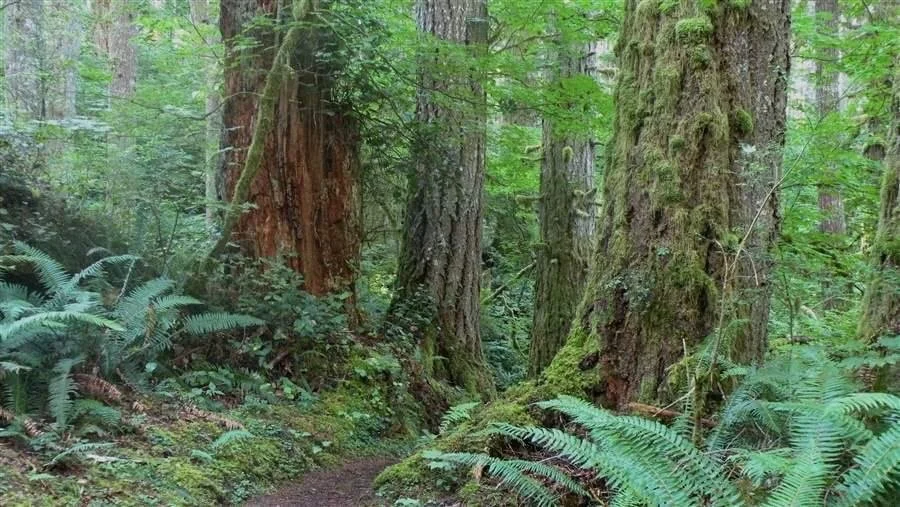
Figure 1. Relic old-growth trees along the Niagara Falls Trail in the Mount Hebo Roadless Area, part of the ~19,000 acres of the Siuslaw National Forest that could soon be lost from federal public ownership. Source: Robert Van Dyk.
At this very moment, there are organized efforts afoot to remove hundreds of thousands of acres of western Oregon federal public lands from federal public ownership. Similar efforts are ongoing in other states as well. The seekers of these precious federal public lands want these lands given to them without compensating the owners of the lands: the people of the United States.
Yet, any outcry by organizations (some of which you likely support) purporting to represent the public’s interest in conservation and/or public lands is at best muted or—far too likely—nonexistent. In some cases, such “conservation” organizations actually support such transfers. In other cases, these “conservation” organizations take a “neutral” stance. In politics, taking no position on a matter within an organization’s core interest area is interpreted by politicians as either tacit support or silent acquiescence.
How can this be?
It is because those seeking to take over federal public lands are not the usual suspects that immediately come to mind: mining, energy, timber, or grazing concerns, and/or others interested in development. Rather, in these cases, those demanding these federal public lands for their own use are Native American tribes.
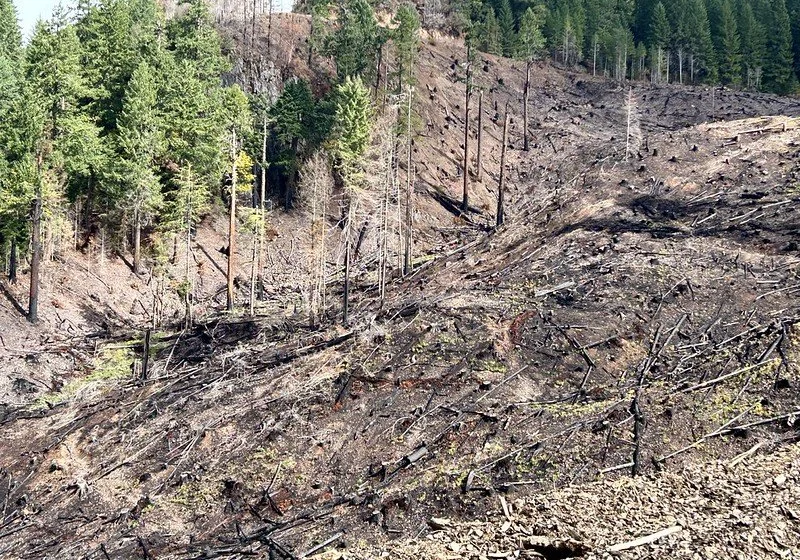
Figure 2. Former federal public forestland now owned by the Cow Creek Band of Umpqua Indians, which logged it. Any features or results of supposed superior stewardship are lost on me. Source: Francis Eatherington.
Federal Public Lands Belong to All Americans
In a special message to Congress in 1971, President Richard Nixon observed that “[The public lands represent] in a sense, the ‘breathing space’ of the nation.” The vast spaces of the public lands give us the elbow room to be alone. Even if we rarely—or even never—visit a place large enough and wild enough to get lost (and maybe die) in, the existence of such places is vital to the American experience. The psychological and spiritual value of public lands is immeasurable. I may never visit the most remote reaches of public lands in Washington, Wyoming, West Virginia, or Wisconsin, but I am happier knowing they are there.
In the same message, Nixon also said:
The public lands belong to all Americans. They are part of the heritage and the birthright of every citizen. It is important, therefore, that these lands be managed wisely, that their environmental values be carefully safeguarded, and that we deal with these lands as trustees for the future.
See Public Lands Blog post “Why Public Lands” (2016)
To adequately ensure the conservation of lands and waters across the landscape (and seascape) and over time, more—not fewer—public lands are necessary. Public lands provide public goods and services that private or other sectors cannot or will not provide.
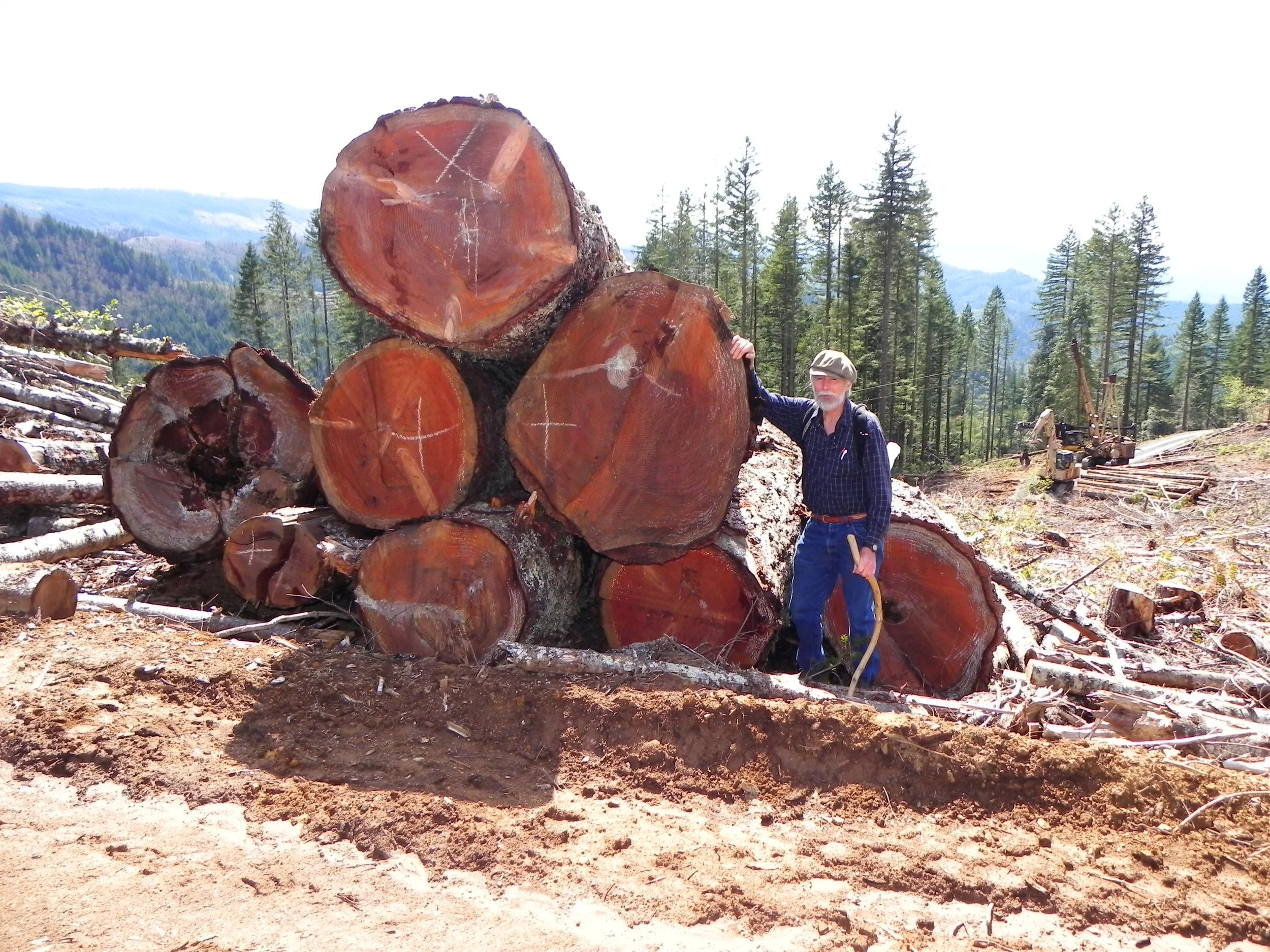
Figure 3. Former federal public land now owned by, and since logged by, the Coquille Tribe. Any features or results of supposed superior stewardship are lost on me. Source: Francis Eatherington.
Rationales for Giving Away Federal Public Lands
Several conservation organizations have gone on record as supporting the transfer of federal public lands to tribal control. Their rationale generally takes one or both of two forms:
1. Native Americans will better manage the lands and resources than does the federal government. In essence, the argument is that Native Americans have stewarded the lands since time immemorial, the lands were in fine shape until Europeans arrived, and Native stewardship would fix all the wrongs that have occurred under federal control.
2. It’s simply the right thing to do. Native American tribes have been screwed and this is at least some justice. In essence, the argument is that justice for past wrongs is more important than public lands today and in the future, and the only way to obtain justice is by tribalizing federal public lands.
Let’s examine both rationales.
Positive stereotyping of Native Americans
The first argument suggests that Native Americans by virtue of their race or ethnicity are better land stewards than members of other races and ethnicities. This rationale falters in the face of the truth that positive stereotyping of any race or ethnicity is still racist. Ascribing generalized traits to any race or ethnicity is problematic. Such is clear to most of us when the traits are pejorative and/or negative, but less so when the traits are approbatory. Not all Black Americans are good at sports, not all Asian Americans are good at math, and not all Native Americans are good at nature stewardship.
Some Native American tribal governments are generally good land, water, and/or wildlife stewards, while some are not. Just as true is that some state governments are supportive of federal public lands and some are hostile to them. The same goes for county governments, even in the same state. Some federal land management agencies are generally good stewards; some are not. For example, some county and tribal governments in Oregon are supportive of Senator Ron Wyden’s (and cosponsor Senator Jeff Merkley’s) proposed River Democracy Act, which would establish or expand numerous wild and scenic rivers in Oregon, while some county and tribal governments in Oregon are in opposition.
Expecting all Native Americans or Native American tribes to think and act uniformly is no more realistic than expecting the same of—to use the terms that will be used for the 2030 census—White, Black or African American, American Indian or Alaska Native, Asian, Native Hawaiian or Other Pacific Islander, Middle Eastern and North African, and Some Other Race. (In “For More Information” below, I’ve included links to a couple of academic articles on positive racial stereotypes.)
Many Native American tribes are interested in profiting from mineral, energy, timber, grazing, and/or other development. Unfortunately, it matters not to Mother Nature whether the harms she suffers are from exploitation by transnational corporations or Indigenous tribes.
Pursuing justice at the expense of public goods
Gifting federal public lands to tribes is being suggested as compensation for past wrongs for several reasons, including these:
• The character of such lands is generally the closest to the condition of the lands when they were taken from Native Americans. Transferring public lands is simply giving back some of what was taken.
• From a fiscal standpoint, the lands are “free.” Congress doesn’t have to pass a law appropriating tax dollars to purchase the land and give it to a Native American tribe. It can simply pass a law giving the land away. While such doesn’t affect the government’s profit and loss statement, it does affect its balance sheet, as the asset value is lost to the American people.
• It takes the pressure off of nonfederal lands. The argument that federal lands should be returned to Native American tribes applies equally, if not more so, to nonfederal lands. In other words, all the lands in the United States. Talk of gifting public lands deflects attention from the question, What about the private lands that also were stolen from Indigenous people?
There is a double standard in this country when we talk about Native Americans and land they once owned. For example, all modern histories of the National Park System acknowledge that the lands were once owned by Native Americans, that Native Americans were killed over or run off of such lands, that fair compensation was not received, and that even if a treaty was signed, it was under coercion. All true, and these truths should be acknowledged.
However, such is equally true of land-grant universities that received federal (once Native American) land to get them started. And of the railroads that received large land grants. And of all those settlers who received small land grants, which facilitated the lands that Americans farm, work, and live on today. In other words, the house you or I live in is situated on stolen land.
The federal public lands are the lands that no one (initially) wanted at the time of the great land giveaways of the nineteenth and twentieth centuries. They were the least economically valuable, being generally mountainous, remote, and of low productivity. Native American tribes often declare sacred the federal lands where development that they oppose is proposed. These lands are indeed sacred. However, for the most part, Native Americans did not live on what are now the nation’s federal public lands. They used (hunted on, gathered from, and the like) those lands, but for the most part they lived along large rivers and streams and in lowlands, just like all of us do today. My property is sacred to me, and I can only surmise it is sacred to Native Americans as well. Any tribal right or claim to federal public land is equal to a claim to my (and your) property.
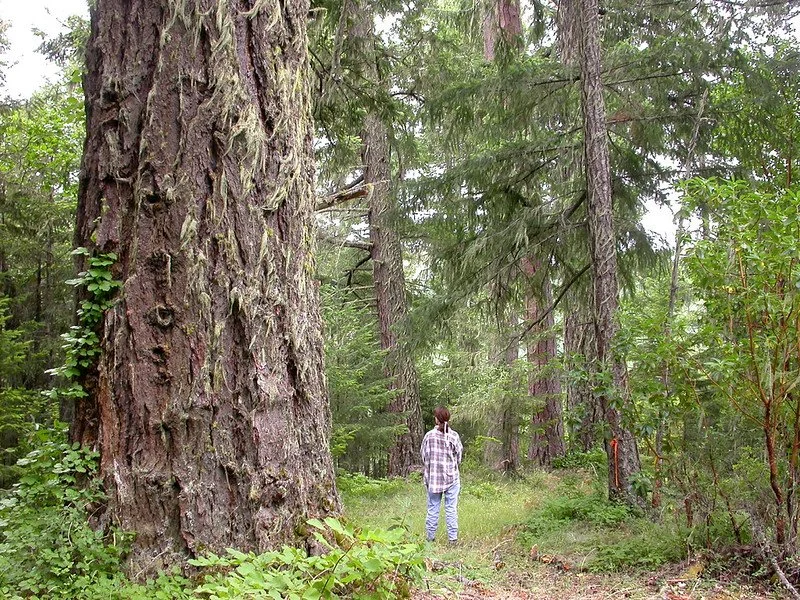
Figure 4. Former federal old-growth forest now owned by the Cow Creek Band of Umpqua Indians. It has likely been clear-cut by now; if not, it soon will be. Source: Francis Eatherington.
The Response of Oregon Conservation Organizations
Last July, Cascadia Wildlands, the Center for Biological Diversity, the Environmental Protection Information Center, the Klamath-Siskiyou Wildlands Center, Oregon Wild, Umpqua Watersheds, and Willamette Riverkeeper sent a joint letter to the Oregon congressional delegation regarding the potential transfer of federal public lands in western Oregon to Native American tribes. The letter was clearly written by a committee and represented the lowest common denominator that all organizations could agree to.
The letter acknowledged the natural, historical, cultural, and recreational value of public lands. It raised questions that alluded to the policy problems and political consequences that would result from transfers of these lands. It suggested that acquiring nonfederal lands on behalf of tribes is superior to transferring federal public lands. But it stopped short of a ringing defense of the concept of public lands.
The letter asserted that “where public lands are the only solution” to achieving justice, “values like old-growth forests, undeveloped roadless wildlands, and public access and meaningful engagement in land management decisions should be safeguarded.” As soft as the letter was, at least one of the signing organizations soon started caving after a board member was yelled at by a tribal representative.
Imposing such protective terms and conditions flies in the face of tribal sovereignty, which is of central importance to tribes. Ownership is control to do (within legal restraints) what one wants to do with one’s property. That may be clear-cutting the forest, building a feedlot, excavating a gravel pit, growing row crops, carving up land for development (housing, commercial, and/or industrial)—or it may be establishing a nature preserve.
Some conservation organizations are trying to stake out a moderate position along the lines of they don’t care who owns and manages the lands as long as the lands’ values are protected, public access is maintained, and such. One problem with such a middle-of-the-road political position is that one has twice the probability of being struck by oncoming traffic.
See Public Lands Blog post “Trump Signs DeFazio-Walden-Wyden-Merkley Bill Giving Away 50 Square Miles of Federal Public Land in Oregon” (2018)
A few conservation organizations are all for public lands conservation—unless a tribe wants the land. During the giveaway of 2018, more than one conservation leader in Oregon admitted to me that the transfer would result in the clear-cutting of old-growth and forfeiting of other important forest values but that “it was the right thing to do.” Some gave higher priority to Native American tribal land than federal public land. Others simply were afraid of not being politically correct if they opposed the transfer.
Behind Your Back: Where the Far Right and Far Left Meet
Some of the far right wants to privatize federal public lands. Some of the far left wants to tribalize federal public lands. Ecologically and hydrologically, the effect on the federal public lands would be indistinguishable whether giving away the land came from the left or the right. The effect would be degradation or elimination of multiple public lands values. (Reminder: good Native American stewardship is not assured.)
In western Oregon, Big Timber is supporting the proposed transfers to tribes for one reason only. They believe such will get them more timber from the new tribal owners than from the current federal owners. That should give any conservation organization pause.
See Public Lands Blog posts “The Other Anti-Public-Lands Constituency: Left-Wing Extremists” (2016) and “While It Has Never Been Worse . . .” (2016)
A Just and Politically Palatable Solution
Politically, tribalizing federal public lands will be no more popular than privatizing public lands.
Rather than compensating tribes with federal public lands, it would be better to compensate them with federal public dollars. An upside for tribes would be that they could use the money as they chose. They could buy nonfederal lands from willing sellers, invest the money, distribute the money to tribal members, or whatever. It would be up to the tribe.
With most private timberland management being what it is, transferring private timberlands to tribes would be no worse for the lands and might be better. Of course, we are starting with a very low bar.
Where Does It End?
Right now, five tribes in Oregon are pursuing federal legislation to transfer public lands into their ownership. Assume that these transfer proposals become law. Hundreds of thousands of acres of federal public lands are transferred to tribes. Does that mean the millions of acres of federal public lands that remain are no longer under threat of tribalization? Will these transfers satiate/placate/satisfy tribal demands for land back? I would think not.
In an 1864 treaty, the Klamath Tribes ceded ~22 million acres to the United States and kept for themselves ~1.5 million acres as the Klamath Indian Reservation. In the 1950s, the United States “terminated” the official status of the tribes and compensated individual tribal members for taking their reservation forestlands, about half of which became the Winema National Forest and the remainder private corporate timberland. Only one tribal member, Edison Chiloquin, refused to take the money.
Many years ago, the then chair of the Klamath Tribes told me that he wanted the lands and waters of what is now Crater Lake National Park back. I can’t blame him for wanting this, but it should not happen. What should happen is that the US Government should appropriate adequate sums of money to compensate the tribes for lost lands, with the money going to tribes to spend as they think best.
Bottom Line: While Native American tribes deserve redress of their grievances, it should not come at the expense of the nation’s public lands but rather from the nation’s treasury.
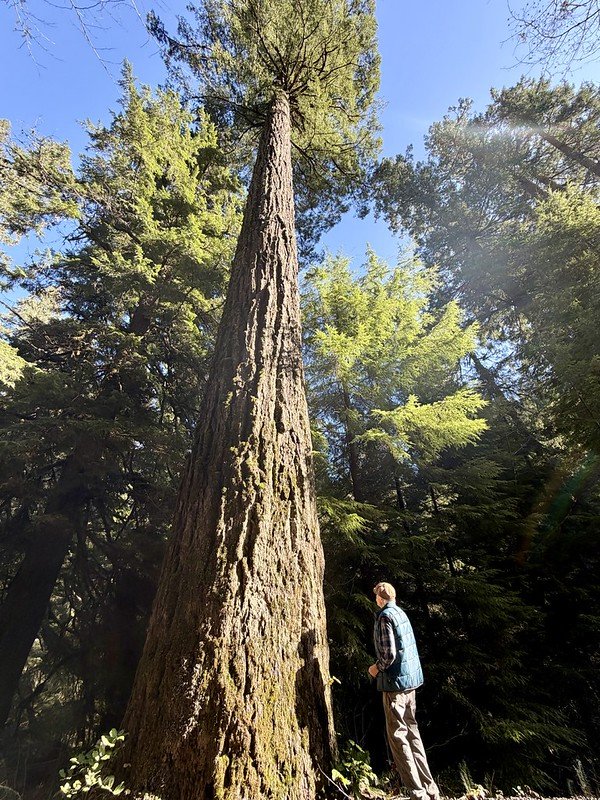
Figure 5. Mature and old-growth forest on federal public lands administered by the Bureau of Land Management that are sought after by the Coquille Tribe, which promises to share logging revenues with local counties. Source: Francis Eatherington.
For More Information
Cheng, Danqiao. 2022. A License to Obliviousness: Positive Stereotypes Reduce Acknowledgement of Racial Discrimination: A dissertation submitted in partial satisfaction of the requirements for the degree Doctor of Philosophy in Management. University of California, Los Angeles.
Davis-Delano, Laurel R., Anna Kawennison Fetter, Michael M. Gale, Elizabeth M. Morgan, and Renee V. Galliher. 2026. “Liberal white Americans’ endorsement of and grappling with harmful positive racial stereotypes.” Ethnic and Racial Studies.
Wozniacka, Gosia. July 19, 2026. “A historic wrong meets a modern dilemma in Oregon’s forests.” OregonLive/The Oregonian.
———. July 21, 2026. “Oregon tribes seek federal land transfers. Conservation groups see another option.” OregonLive/The Oregonian.